


Generational Dynamics: Consumption, Technology, and Socio-Economic Transformations from Baby Boomers to Generation Alpha

Executive Summary:
The global population can be categorized into several distinct groups based on their birth periods. Research indicates that individuals born in certain eras often share characteristics shaped by prevailing macro-environmental factors. The current global demographic encompasses multiple generations: the Silent Generation, Baby Boomers, Generation X, Millennials, Generation Z, and Generation Alpha. The latest cohort is Generation Beta, which includes individuals born on January 1, 2026 or later. This article explores key attributes of these generations that impact their purchasing behaviors and social and economic interactions. Baby Boomers tend to enjoy their savings and favorable pension benefits, while Generation X often takes the lead in private, public, and third-sector organizations. In contrast, Millennials’ and Generation Z’s purchase behavior benefits the technology, entertainment, food, and travel industries. Notably, Generation Alpha, despite their young age, is becoming increasingly influential in brand preferences and household spending. Furthermore, there are generational differences between digital migrants and digital natives. Even among digital natives, distinctions arise between Millennials, Generation Z, and Generation Alpha. Businesses can gain valuable insights by understanding these differences, and social scientists and policymakers can benefit from recognizing these behavioral variations to better comprehend transformations at individual, family, and societal levels.
Introduction
Children born on January 1, 2026, will belong to a new generation known as Generation Beta. In a rapidly changing world, we observe significant differences among various generations. These differences manifest in their perspectives, preferences, lifestyles, and interactions with technology, as well as their purchasing and consumption patterns, contributing to a more diverse and complex society. Generational distinctions are further influenced by emerging, disruptive innovations that continuously reshape daily life. Additionally, shifts in social dynamics, international relations, and global events, such as climate change, conflicts, and pandemics, play a crucial role in differentiating these generations. Variability across generations carries essential business and economic implications, as they represent distinct market segments with unique consumer traits. Therefore, it is essential to unpack the characteristics and orientations of different generations and understand how they vary in their consumption behaviors.
Different generations:
Currently, the world population encompasses six generations, ranging from the Silent Generation at the oldest end to Generation Beta at the newest. The oldest and youngest generations represent the two extremes of the population spectrum, with the fewest members found in these groups. Together, Generation Alpha and Generation Z account for approximately 47% of the total population, making them the largest demographics. Millennials follow closely behind, while Generation X and Millennials collectively represent about 38% of the world's population. The Baby Boomers and the Silent Generation comprise the remaining 15%.

Baby Boomers
Baby Boomers are among the earliest generations and constitute a notable share of today’s global population. Individuals from this generation were born in the years following the Second World War, during a period of demographic expansion that saw millions of births. This phenomenon is primarily attributed to the stability and growth experienced in Europe and North America after the war. Furthermore, this period marked the independence of many colonies worldwide, giving rise to new nations filled with hope and ambition. The Baby Boomer generation benefited from this profound social, economic, and political transformation. Access to improved healthcare and education, and to increased consumerism, became more widespread. Additionally, there was significant urban expansion, characterized by affordable housing that fostered the development of vibrant neighborhoods and strengthened social bonds. Concurrently, the rise of electronic media, driven by technological innovation, fueled a surge in popular culture encompassing music and fashion.
As this generation has aged, they have witnessed pivotal events such as the Civil Rights Movement in the United States, the Vietnam War, and numerous democratic movements in Eastern Europe, all of which have profoundly influenced their perspectives. The Baby Boomers are typically characterized as hard-working, ambitious, and competitive. Currently, most individuals from this generation are retired and rely on their pensions. Thanks to improved healthcare services, robust pension schemes, and substantial savings, this generation is likely to enjoy significant disposable income. Companies in the healthcare, travel, and luxury goods sectors often target this demographic. Over the past thirty years, pensioners' income in the UK has increased and has recently stabilized. Older pensioners are classified as part of the Silent Generation, while younger retirees belong to the Baby Boomers. Research indicates that younger pensioners in the UK have higher incomes compared to those from the Silent Generation.

Generation X
This generation has grown up during the transition from the Cold War era to a multipolar world order. They witnessed the economic liberalization that followed the Reagan-Thatcher era and experienced life beyond the Berlin Wall. This generation was among the first to taste globalization and engage with a global consumer culture. From MTV to McDonald’s, they experienced the dynamics of a free market and the liberal economic and political environment that have shaped today’s capitalist landscape. In most countries, particularly in developed ones, Generation X dominates leadership. They represent the wealthiest generation to date. In the United States, the average Gen X household spends approximately USD 100,000 annually. Their expenditures are primarily allocated to housing (37%), followed by travel (17%) and food (12%). This generation plays a pivotal role in leadership across the private, public, and nonprofit sectors, particularly in developed countries. Table 2 offers a comparative overview of Gen X's financial habits.
Region | Leadership Summary | Country/Category Details |
North America | Gen X is the core spending engine | Gen X households spend more per household than Boomers or Millennials; wealthier Gen Xers are concentrated in urban areas |
Western Europe | Gen X dominates | Strong spending in Health & Beauty, Frozen Food, and Travel; dominance notable in UK and Germany |
Asia Pacific | Mixed leadership | China: Gen X peaking now; India: Millennials & Gen Z lead |
Latin America | Transitioning leadership | Brazil: becomes Gen X-led by 2028; Mexico: already Millennial & Gen Z-driven |
Table 2: Position of the Gen X population in various parts of the world; Source: https://nielseniq.com/global/en/news-center/2025/overlooked-and-under-marketed-gen-x-emerges-as-most-influential-global-consumer-cohort/
Millennials
Millennials, born in the 1980s and 1990s, are recognized as the first generation of digital natives, having grown up alongside the rise of mobile and digital technology. They have enjoyed unprecedented access to information, which has heightened their awareness of environmental sustainability as well as social and ethical considerations. However, they also face financial challenges, particularly as the global recession of 2008 coincided with their early adulthood. As the first digital-native generation, Millennials are highly connected through social media and are significantly influenced by their peers, making them a financially savvy consumer segment. They are also comfortable with online shopping. In the United States, Millennials allocate a substantial portion of their budget to dining out and entertainment, following their grocery expenditures, reflecting their enjoyment of life. Figure 3 illustrates the upward trend in spending among U.S. Millennials, while also highlighting the significant costs associated with housing, travel, and healthcare. This generation has been particularly impacted by the rising housing prices in the post-recession era.


Generation Z
Generation Z (Gen Z) comprises digital natives born in the new millennium. This group is typically characterized by their assertiveness and strong opinions, coupled with a deep commitment to moral values, social responsibility, and environmental sustainability. Having grown up amidst discussions of climate change, they have developed an ethos that embraces diversity, equality, and inclusivity. Compared with their millennial predecessors, Gen Z is more technologically savvy, being not only digital natives but also highly familiar with smart devices and social media, which gained prominence during their childhood and early adolescence. In recent years, in countries such as Nepal, Bangladesh, Indonesia, Peru, Mexico, and Serbia, protests led by Gen Z activists have sparked significant upheaval and even regime changes.
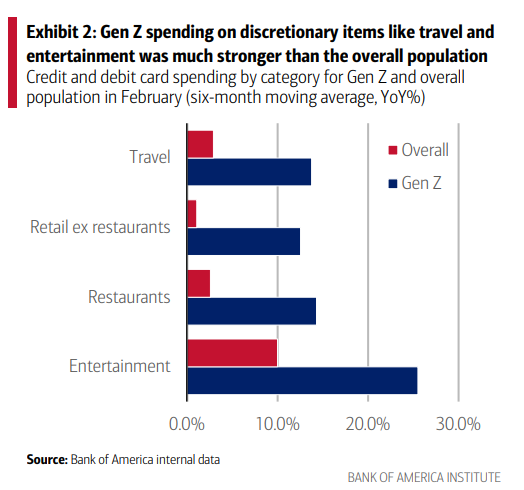
With respect to purchasing power and consumption patterns, Gen Z shows distinctive potential compared with other generations. They are likely to contribute to the growth of global BNPL (Buy Now Pay Later) transaction volume, given their preference for authentic and trendy brands. Due to their extensive engagement with digital environments and social media, they have a natural inclination toward online and mobile purchases. Studies in the US suggest that Gen Z consumers spend disproportionately more than their other generational counterparts on travel, restaurants, and entertainment. As such, businesses in this sector can benefit from targeting Gen Z customers by introducing innovative products that suit this generation's preferences. The increasing importance of environmental sustainability in product design and marketing campaigns, along with the rise of trendy online parallel fashion outlets, serve as strong examples of such business and marketing initiatives. Furthermore, today’s entertainment industry is intertwined with social media and digital spheres. YouTube, Spotify, Instagram and TikTok have fostered their business success by leveraging the Gen Z customer group.
In many countries, the Gen Z population is grappling with an employment crisis. The economic downturn following the pandemic has significantly impacted this generation, which has spent a considerable portion of its academic journey online. While educational attainment among this group has increased, underemployment remains a pressing concern.
Generation Alpha
This generation has grown up in the era of ‘screens,’ with the widespread adoption of smart devices in the early 2010s significantly shaping their exposure to technology. Like Gen Z, they are well-versed in digital technologies and increasingly engage with artificial intelligence. As digital natives, they are defined by hyperconnectivity, visual learning, and deep integration of technology. While growing up surrounded by AI, tablets, and streaming services from infancy may potentially hinder their social and interpersonal skills, it simultaneously fosters independence, acceptance of diversity, and distinctive consumer habits, such as brand loyalty and strong self-expression.
Their excessive use of devices is also a concern regarding long-term social and health-related impacts on the generation. In the US, there is a sharp rise of the ownership of digital devices among children up to 8 years of age.

In the United States, children aged 8 to 14 contribute approximately USD 101 billion annually to direct spending and play a significant role in influencing other household purchases, such as travel, home appliances, and furniture. In the United Kingdom, Generation Alpha possesses a direct spending power of £3.3 billion. A study reveals that parents estimate that 26% of household expenditures are influenced by their children.

Conclusion:
From the discussion above, it is clear that different generations possess distinct characteristics that uniquely influence business, society, and politics. The variations in generational perspectives and their resulting impact on social and economic transformation are to be expected. However, disruptive technological innovations and globalization are rapidly altering generational traits. While businesses are understandably affected and can learn from these changes, it is equally important for social scientists, policymakers, and the general public to understand these transformations in order to assess their implications at social, familial, and individual levels.


